


How to Answer Hard Questions About God from Kids
At some point, nearly every Christian parent finds themselves caught off guard by a theological question from their child. Sometimes the questions come at bedtime. Sometimes in the car. Sometimes in the middle of church or halfway through dinner.
Why did Jesus have to die?
If God knows everything, why do we pray?
What is heaven like?
Why does God let bad things happen?
Where did God come from?
Many parents feel immediate pressure in those moments. We want to answer carefully. We do not want to confuse our children or say something inaccurate. Sometimes we worry that we are not equipped to answer difficult theological questions well.
But part of raising children in the faith means learning to view those questions differently. A child’s questions about God are not interruptions to discipleship. They are discipleship.
Questions are often evidence that children are thinking carefully about Scripture, theology, and the world around them. Children are trying to build categories for understanding God, sin, suffering, eternity, and redemption. Christian parents have the privilege of helping shape those categories over time.
One of the most important things parents can remember is that children do not need immediate theological mastery from us. They need honesty, consistency, and a willingness to keep pointing them back to Scripture.
Sometimes parents feel pressure to give polished, comprehensive theological explanations. But often, the best response is a simple, truthful answer followed by continued conversation over time. Theology is usually formed gradually.
For example, when a child asks, “Why did Jesus have to die?” a parent does not need to launch immediately into a fully developed explanation of substitutionary atonement. A simple answer like, “Because our sin separates us from God, and Jesus came to rescue sinners,” gives children a truthful category they can continue building upon as they mature.
Likewise, when children ask difficult questions about suffering or evil, parents do not need to pretend there are easy answers. Scripture itself speaks honestly about suffering. The Bible does not ignore grief, confusion, fear, or pain. Christianity is not built on pretending hard things do not exist. It is built on the hope that Christ has entered into suffering and will ultimately make all things new.
Children also benefit from hearing parents say, “I do not know,” when appropriate. Christian confidence is not the same thing as pretending to have exhaustive answers to every theological question. Sometimes parents can model humility by saying, “That is an important question. Let’s look at Scripture together,” or, “Christians have thought carefully about that question for a long time.” Children learn not only from the content of our answers, but from the posture we take toward God and His Word.
One helpful practice is learning to answer children’s questions in ways that are both truthful and age-appropriate. Parents sometimes drift toward one of two extremes. Either we oversimplify theology to the point that it becomes vague or misleading, or we overwhelm children with explanations far beyond their developmental stage. Good discipleship often means giving children enough truth to build upon without assuming they must understand every theological nuance immediately.
For example:
- “God has always existed. Nobody made Him.”
- “Sin is anything we think, say, or do that disobeys God.”
- “Prayer is one way God invites us to talk with Him.”
- “Jesus died so sinners could be forgiven and brought back to God.”
- “God is always good, even when we do not fully understand what He is doing.”
These kinds of answers help children build stable theological categories over time.
Parents can also help children learn that Scripture is the final authority for understanding God. Instead of always answering from personal opinion or vague spirituality, we can regularly teach children to ask, “What does the Bible say?” This helps establish early that Christianity is rooted in divine revelation rather than personal preference.
One practical way to do this is simply opening the Bible together when questions arise. If a child asks why Jesus died, read passages about the cross together. If a child asks about creation, read Genesis 1. If a child asks about prayer, read the Lord’s Prayer together. Children begin learning that Scripture itself is where Christians go for truth.
Parents should also remember that theological conversations rarely happen in a straight line. Children revisit the same questions repeatedly as they grow. A four-year-old asking about heaven and a ten-year-old asking about heaven are often asking very different questions developmentally, even if the wording sounds similar. This is normal. Children’s understanding deepens over time through repeated conversations and repeated exposure to truth.
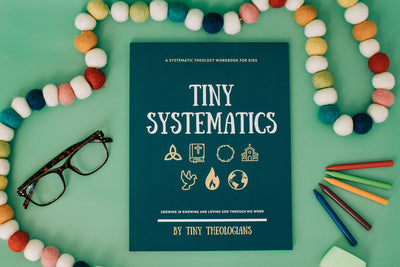
At Tiny Theologians, many of our resources are designed to help families navigate these kinds of theological conversations naturally and consistently. The Tiny Systematics Workbook helps children begin building foundational theological categories about God, sin, salvation, Scripture, and the gospel in age-appropriate ways. The Tiny Apologetics Workbook helps children think carefully about difficult questions related to faith, truth, and Christianity while encouraging thoughtful engagement with Scripture.
For younger children, resources like the ABC Bundle 1 and My God Is help establish foundational truths about God’s character and the storyline of Scripture from an early age. And the Tiny Theologians Podcast gives families another way to continue theological conversations throughout ordinary moments of daily life, whether that is during breakfast, car rides, or bedtime routines.
Parents do not need to fear theological questions from their children. In many ways, those questions are evidence that discipleship is already happening. Children are paying attention. They are listening. They are trying to understand God and His world.
The goal is not to raise children who never have questions. The goal is to raise children who learn to bring their questions to Scripture, to the church, and ultimately to Christ Himself.