


How to Teach Kids the Big Story of the Bible
One of the challenges of teaching children the Bible is helping them understand that Scripture is telling one story. Many children grow up knowing individual Bible stories. They know Noah built the ark, David fought Goliath, Jonah was swallowed by a fish, and Jesus died on the cross. But those stories can easily feel disconnected from one another. A child may know dozens of Bible stories while still struggling to understand what the Bible itself is actually about. Christian parents are not simply trying to help children collect Bible knowledge or memorize facts about biblical characters. We are helping them understand who God is, what sin has done to the world, and how God redeems sinners through Christ. The Bible is not a collection of isolated moral lessons. It is the unified story of God’s redemption.
One of the simplest ways to help children understand the Bible as a whole is to regularly return to its central storyline. Many families use broad categories like Creation, Fall, Redemption, and Restoration because those categories help children begin placing biblical events within a larger framework. God created the world good. Humanity rebelled against Him in sin. God promised redemption and unfolded that promise throughout the Old Testament through covenants, sacrifices, prophets, and kings that all pointed forward to Christ. Then, in the New Testament, Jesus comes as the fulfillment of God’s promises. He lives the sinless life we could not live, dies in the place of sinners, rises again, and secures redemption for all who trust in Him. One day, He will return to make all things new. Children do not need to master every theological category immediately, but they can begin learning that every part of Scripture fits within the larger story God is telling.
One common mistake in children’s discipleship is reducing Bible stories to detached behavior lessons. David becomes an example of bravery. Esther becomes an example of courage. Noah becomes an example of obedience. Certainly Scripture teaches us how to live, but the primary purpose of the Bible is not moral instruction separated from the gospel. The Bible reveals who God is and what He has done to save sinners. When children only hear “be brave like David,” they miss the larger point of the story. David was not ultimately the hero. God was. More than that, David points beyond himself to the greater King who would come. Jesus is the true and better King who defeats the enemies His people could never conquer on their own. As children grow, we want them to begin asking larger questions when they read Scripture. What does this passage teach us about God? How does this fit into the story of redemption? How does this point forward to Christ?
Parents sometimes underestimate how much children are capable of understanding theologically. Children may not use theological language with precision immediately, but they are entirely capable of learning meaningful biblical categories. In many ways, children are naturally theological because they constantly ask foundational questions. Why did Jesus have to die? What is sin? Why do we pray? How do we know God is real? These questions are not distractions from discipleship. They are opportunities for it. Children can learn words like gospel, grace, covenant, redemption, holiness, resurrection, and forgiveness. The goal is not to impress children with theological vocabulary. The goal is to give them language for understanding God and His Word.
Parents also sometimes assume that discipleship requires lengthy devotionals or highly structured family worship routines. But most children learn through ordinary repetition. They learn through hearing Scripture read consistently, through repeated language, through songs, conversations, and questions asked throughout ordinary life. Formation usually happens slowly. A child who repeatedly hears that God is holy, sin separates us from God, Jesus rescues sinners, and Scripture is true is slowly building categories for understanding the world biblically. This kind of formation rarely feels dramatic in the moment, but over years, repeated truth shapes children deeply.
One of the most meaningful things parents can do is help children notice how Scripture connects together. Help them see how the sacrifices point to Jesus, how the Passover lamb points to Jesus, how the prophets point to Jesus, and how God’s covenant promises are fulfilled in Christ. When Jesus spoke to His disciples after the resurrection, Luke tells us that “beginning with Moses and all the Prophets, he explained to them what was said in all the Scriptures concerning himself” (Luke 24:27, NIV). Jesus taught His followers to read the Bible as a unified story centered on Him. We want our children to learn to read Scripture that way too.
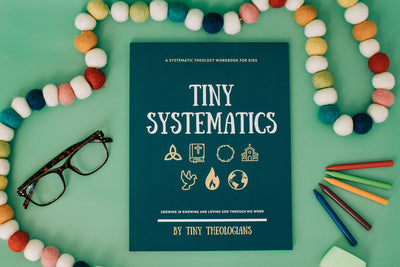
This is one reason we created resources like the Tiny Bible Survey. Rather than treating the Bible as disconnected stories, it helps children begin understanding the structure, storyline, and themes of Scripture as a whole. Resources like the The Gospel Changes Everything Family Devotional Cards also help families connect everyday discipleship conversations back to the gospel and the larger story God is telling throughout Scripture. And for children beginning to transition into reading more of the Bible independently, the Tiny Theologians Bible was designed to help children build biblical literacy while learning how the whole Bible fits together.
Parents do not need seminary degrees to teach their children the Bible faithfully. You do not need perfectly structured family discipleship plans or hour-long devotionals. You need ordinary rhythms of faithfulness. Read Scripture together consistently. Ask simple questions. Help children notice what passages teach about God. Point them toward Christ repeatedly.
A few simple questions can help children begin building biblical categories:
- What does this passage teach us about God?
- What does this passage teach us about people?
- How does this point us to Jesus?
- Is there a promise here we should remember?
For younger children, even simple summaries are deeply formative:
- God keeps His promises.
- Jesus came to rescue sinners.
- The Bible tells one story about God saving His people.
Over time, those repeated truths help children begin understanding Scripture not as disconnected stories, but as one unified story of redemption centered on Christ. That kind of biblical literacy is formed slowly through years of ordinary faithfulness.